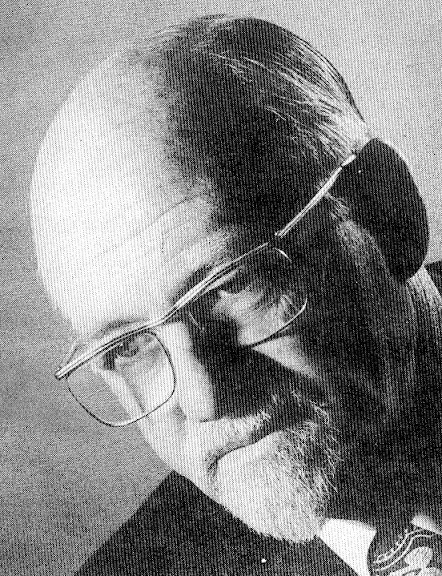
Jan Adriaan Louw Taljaard born 29 October 1915, Sanderton, Transvaal, South Africa, to a family of thirteen. He died in 1994.
A reformed philosopher who developed his ideas in close contact with H. G. Stoker, D. H. Th. Vollenhoven, H. Dooyeweerd, and S. U. Zuidema and others.
He became a student at the Potchefstroom University College for Christian Higher Education (PU for CHE). His studies were interrupted by the Second World War. In 1942 he became a political prisoner; there he met H. G. Stoker, who greatly influenced Taljaard’s approach to philosophy.
In 18954 he completed his undergraduate studies with a BA. He became a teaching assistant and then a lecturer in Psychology and Philosophy. He obtained his MA in 1947. He married Dirkie Jacoba van Rooy in 1948. In 1950 he went to study at the Free University, Amsterdam, under Vollenhoven.
He returned to South Africa in 1956 and became a senior lecturer at the PU for CHE. On Stoker’s retirement in 1964, he became head of the philosophy department.
The South African journal Koers 40 (4-6): 221-424 was a festschrift for Taljaard, to celebrate his 60th birthday. It contains biographical notes by Revd J A Kruger and a list of publications by Herman Conradie.
B. J. van der Walt studied under Taljaard for his MA (1968) and PhD (1974)
On Taljaard see: J.A. Kruger “Scripturally directed action: A radical stance in contemporary society — Biographical notes on Prof. J.A.L. Taljaard.” Koers
DOI: https://doi.org/10.4102/koers.v40i4-6.835
Publications in English
1971. Radical thinking: a religious answer to secularisation. Perspektief 10 (4) : 236-240.
1971. The age of the manager and the task of the philosopher. Perspektief : kwartaalblad ter bevordering van die Christelike wysbegeerte en die Christelikwysgerige grondslae van die vakwetenskappe . 9(4) ; 10(1): 74-81
1990. The new faith-science debate : probing cosmology, technology and theology, by J.M. Magnum (Boekbespreking). Kerkblad (GKSA) 35-36 (29 Aug. 1990)
1976. Polished Lenses: A Philosophy That Proclaims the Sovereignty of God Over Creation and Also Over Every Aspect of Human Activity (Potchefstroom: Pro Rege)
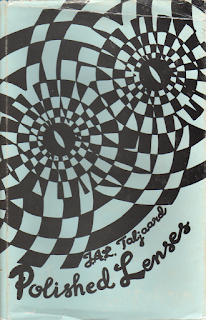
Polished Lenses sets out to present a philosophy that proclaims the sovereignty of God over the whole of creation and over every aspect of human activity.
CONTENTS
CONTENTS 1. Foreword
2. Prolegomena
3. Reality in mutual coherence
3.1. God: The Holy Trinity
3.1.1. Introduction
3.1.2. The God of the Word Revelation
3.2. The ontic law
3.2.1. Introduction
3.2.2. Thing-laws
3.2.3. Object-laws
3.2.4. Structural laws
3.2.5. Positivized laws
3.2.6. Norms and principles
3.3. Creation
3.3.1. Heaven
3.3.2. Earth
3.4. Mutual coherence
3.4.1. Mutual coherence on earth
3.4.2. The mutual coherence between heaven and earth
3.4.3. God, law and creation in mutual coherence
4. Man
4.1. Revelational knowledge about man
4.1.1. Man as concrete created reality
4.1.2. Man as religious being
4.1.3. Man in the post-fall era
4.2. Man’s basic features
4.3. Man’s act-structure
4.4. Interlacement within man
4.5. Man in relation to man
4.6. Conclusion
5. Communal life as concrete created reality
5.1. Introduction
5.2. The ontological basis of communal life
5.2.1. God, the Holy Trinity
5.2.2. The ontic law
5.2.3. Earthly creation
5.3 The anthropological basis of communal life
5.4. Common basic features of communal life
5.4.1. Form of communal life as concrete created realities
5.4.2. Their basic features
5.5. Communal life: mutual coherence
5.5.1. The mutual coherence between all realities
5.5.2. The mutual coherence between man and communities
5.5.3. The mutual coherence between different types of communities
5.5.4. Mutual coherence between communities of the same subjective identity
5.6. The school as a unique community
6. Knowledge as concrete reality
6.1. Introduction
6.2. Knowledge by somebody
6.3. Knowledge about something
6.4. The knowing activity
6.4.1. The analytical coherence
6.4.2. The vertical relation in the intellectual activity
6.4.3. The relation between the activity and the cognizable
6.5. Knowledge as a result
6.5.1. Kinds of knowledge
6.5.2. Interlude
7. Footnotes
8. Index
8.1. Index of persons
8.2. Subject index
8.3. Index of texts


