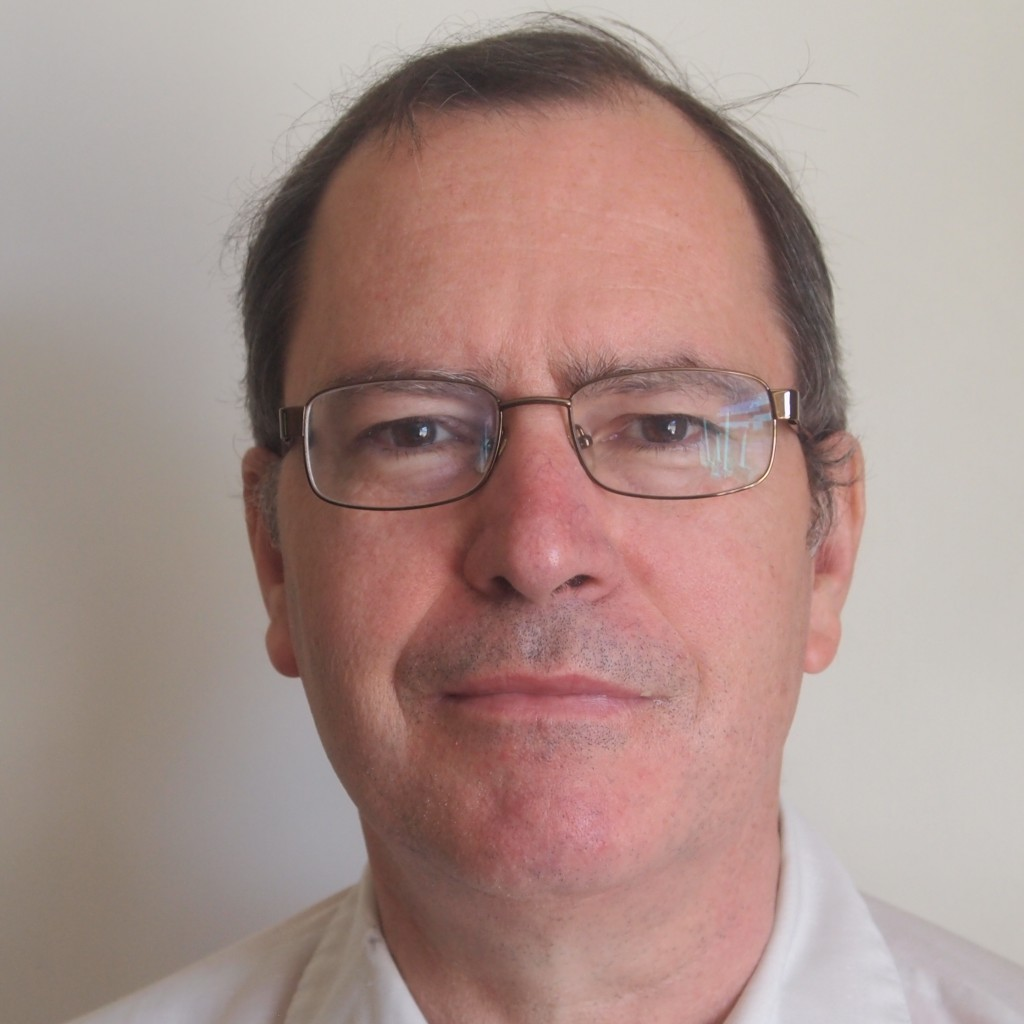
Revd Dr Jeremy G. A. Ive is Church of England vicar in Kent. He has two doctorates and blogs at Trinitarian and Reformational.
Born Durban, South Africa, 1957.
B.A. majoring in History, Philosophy and Politics (Rhodes University, 1981).
B.A. Hons in History and Politics (Rhodes University, 1981).
PhD thesis: “The Local Dimensions of Defence: the Standing Army and Militia in the Eastern Counties, 1649-1660” (Cambridge University, 1986).
Secretary of the Newick Park Initiative on South Africa (1986-1989).
Theological training, Wycliffe Hall Oxford (1989-1991).
Curacy at Ivybridge, Devon (1991-1994).
M. Phil. thesis: “R.W. Jenson’s critique of Standard Religion and his Temporal Account of the Trinty”,( King’s College, London, 1995).
Priest-in-Charge, Abbottskerswell, Diocese of Exeter (1995-1999) and also
Project Advisor to the Newick Park Initiative on Rwanda (1994-1999).
Priest-in-Charge/Vicar, Tudeley cum Capel with Five Oak Green, Diocese of Rochester(1999 to present).
Lay Ministry Advisor, Diocese of Rochester (1999-2001).
Executive Director, Relationships Foundation International, formerly the Newick Park Initiative (1999-2002).
Ph.D. Thesis, “A Critically Comparative Kuyperian Analysis and a Trinitarian, ‘Perichoretic’ Reconstruction of the Reformational Philosophies of Dirk H.Th. Vollenhoven and Herman Dooyeweerd” (King’s College London, 2012).
An autobiographical sketch
My Journey
I have a deep commitment to integrating rigorous Christian thought with practical engagement in some of the world’s most challenging conflicts, driven by a vision for relational peacebuilding and cultural transformation.
I was born in Durban (eThekwini), South Africa, but my family soon moved to Cape Town and then Johannesburg, where I went to school. After two years of military service, I attended Rhodes University in Grahamstown, majoring in History, Philosophy, and Politics, and then completing joint Honours in History and Politics. My intellectual path was profoundly shaped by Reformational Philosophy, which I discovered early on through Francis Schaeffer’s Escape from Reason and The God Who Is There in my early teens. This opened my eyes to a rigorous critique of Western secular philosophy and social and political thought, a perspective I further developed by studying Cornelius Van Til and Herman Dooyeweerd, especially after a visit from Danie Strauss to the Philosophy Department at Rhodes. This Reformational lens provided a systematic way to engage with the Anglo-American positivist philosophical tradition prevalent during my university years.
This philosophical grounding led in due course to political engagement. In November 1979, following the South African Christian Leadership Assembly (SACLA), I co-founded the Student Union for Christian Action (SUCA). As its Secretary, I aimed to inject a Christian voice into the political bloodstream, particularly challenging the misuse of “sphere-sovereignty” to justify Apartheid. While SUCA later became more activist, the connections I made, especially on Afrikaans and African campuses, were invaluable. This led to collaborations with figures like Theuns Eloff and engagement with the Reformational community at the University of the Orange Free State, deepening my understanding of the “South African question” and laying the groundwork for my future peacebuilding efforts.
In 1981, I embarked on a PhD in History at Christ’s College, Cambridge. My research explored Christian perspectives on historical periods where Christian ideals were prominent, aligning with the Braudelian approach to history that emphasizes the interplay of various factors but I came to focus specifically on the Cromwellian period, with a study of the loca structure of defence in the Eastern Counties of England from 1949-1660 which I undertook under Dr (now Professor) John Morrill.
During my graduate studies at Cambridge, I actively fostered Christian intellectual engagement. I supported a Christian Historians group and co-convened a Dooyeweerdian discussion group, which later evolved into College House in Cambridge. This group organized conferences and hosted notable figures from the Institute for Christian Studies (ICS) in Toronto, including Henk Hart, Jim Olthuis, Cal Seerveld, Thomas MacIntyre, and Paul Marshall. My commitment to Reformational thought, however, also led me to recognize its internal complexities, as highlighted by Jacob Klapwijk’s seminal article “Reformational Philosophy on the Boundary between the Past and the Future” (1987, transl. H.D. Morton, in: Philosophia Reformata 52, pp. 101-34.
Simultaneously, I deepened my theological understanding, particularly concerning Trinitarian theology. I came to see it not merely as a test of orthodoxy but as a living, transformative doctrine. I explored this conviction during my theological studies at Wycliffe Hall, Oxford, in preparation for ordination, and later through systematic study of Robert Jenson’s theology under Professor Colin Gunton for an MPhil at King’s College, London, awarded in 1995. The writings and insights of Bishop Lesslie Newbigin, a key figure in the Gospel and our Culture Movement, also profoundly influenced my vision for the reorientation of Western culture in light of Christ. My conviction remains that a combination of radical Trinitarian theology and Reformational philosophy offers the most promising path towards the true transformation of Western culture and the global church.
After serving my curacy in Ivybridge and my first incumbency in Abbotskerswell, both in Devon, I became the incumbent in Kent at Tudeley and Capel with Five Oak Green in 1999, a role I continue to hold alongside other significant commitments. These include the Diocesan lay training program from 1999 to 2002, and involvement in “Track Two” peacebuilding processes. I have a long history in this field, having worked on processes in South Africa (1986-1991), Rwanda (1994-1999) and Sudan (1999-2002).
Since 2014, my expertise in peacebuilding has been focused on two initiatives under the auspices of Relational Peacebuilding Initiatives (RPI), where I serve as a Senior Advisor, currenly engaged in a peacebuilding process in Ukraine and Korea.
In addition to my practical peacebuilding work, I undertook a part-time doctorate at King’s College, under Professor Paul Janz, ultimately focused on a constructive critical comparison of Vollenhoven and Dooyeweerd. awarded in 2012. I continue my academic contributions with published articles and with two works in progress, The Outline of a Christian Worldview and The Outline of a Christian Philosophy both available on my Academia.edu profile.
Audio Summaries
Audio summaries of Jeremy’s work are available here and here.
The following audio summaries of Jeremy’s work are available:
These offer a concise guide to Jeremy’s “The Roots of Reformational Philosophy: The Thought of Dirk H.Th. Vollenhoven and Herman Dooyeweerd in the Light of the Trinitarian Vision of Abraham Kuyper“ (unpublished, 2014).. Each audio summary is designed to correspond directly with the sections found within the document, making it easy to navigate.
Christian Worldview & Philosophy
These are summaries of work in progress in establishing a systematic Reformational philosophy, building upon the insights of Dooyeweerd and Vollenhoven. The approach is deeply rooted in a Trinitarian vision, inspired by the foundational work of Abraham Kuyper, and firmly founded in Scripture. These summaries offer an overview of the concepts being developed within these texts, which can be found on Jeremy‘s Academia.edu page, namely The Outline of a Christian Worldview and The Outline of a Christian Philosophy
Publications
The Roots of Reformational Philosophy: The Thought of Dirk H.Th. Vollenhoven and Herman Dooyeweerd in the Light of the Trinitarian Vision of Abraham Kuyper. Unpublished, 2014.
This is an updated version of Jeremy’s 2012 PhD (now with a person index)
Unpublished Theses
2012. ‘A Critically Comparative Kuyperian Analysis and a Trinitarian, ‘Perichoretic’ Reconstruction of the Reformational Philosophies of Dirk H.Th. Vollenhoven and Herman Dooyeweerd‘ PhD Thesis. King’s College London
1986. ‘The local dimensions of defence: the standing army and militia in Norfolk, Suffolk and Essex, 1649-1660’. PhD Thesis. University of Cambridge.
1995. ‘The God of Faith: R.W. Jenson’s Critique of Standard Religion and his Temporal Account of the Trinity’. M.Phil Thesis. King’s College London, London, 1995.
Published Articles
2000. ‘Robert Jenson’s theology of history’ in Trinity, Time and Church, Festschrift for R.W Jenson ed. Colin E. Gunton (Grand Rapids, Michigan/Cambridge, UK: Wm. B. Eerdman’s Publishing Company): 146-157.
2003. ‘Peace-building from a biblical perspective’, Engage 1, 3.
2004. ‘What on Earth is the Trinity? The Trinity in everyday life’ in Quodlibet Journal, vol. 6.
2005. ‘Relationships in the Christian tradition’ in Jubilee Manifesto, ed. Michael Schluter and John Ashcroft (Leicester: Inter-Varsity Press)
2005. ‘International relations and defence’ in Jubilee Manifesto, ed. Michael Schluter and John Ashcroft (Leicester: Inter-Varsity Press)
2015. The Contribution and Philosophical Development of the Reformational Philosopher, Dirk H. Th. Vollenhoven. Philosophia Reformata 80(2): 159–177.
2018. The covenantal trinitarian alternative to the scholastic dilemma. In die Skriflig/In Luce Verbi 52(3). DOI: https://doi.org/10.4102/ids.v52i3.2304
2021 “Gunton and Jenson” in T&T Handbook of Colin Gunton, ed. Andrew Pickard, Myk Habets and Murray Rae. London, New York, Oxford, New Delhi, Sydney: T&T Clark, 373-383.
2022. The Contribution and Philosophical Development of the Reformational Philosopher Herman Dooyeweerd and His Conversation with Dirk Vollenhoven. Philosophia Reformata Online Publication Date: 06 Dec 2022
2023. “Dooyeweerd and Vollenhoven: What They Share, How They Differ, and How They Complement One Another,” in Discovering Dooyeweerd, ed. D. F. M. Strauss. Jordan Station, Ont: Paideia Press, 501–511.
Reviews
Gavin D’Costa, The Meeting of Religions and the Trinity’ in Anvil, vol. 18 (2001): 314-315.
Gerald O’Collins, The Tripersonal God: Understanding and interpreting the Trinity’ in Anvil, vol. 18 (2001): 142.
Philip W. Butin, The Trinity’ in Anvil, vol. 19 (2002): 139.
Ben Witherington III and Laura M Ice, The Shadow of the Almighty: Father, Son and Spirit in Biblical Perspective’ in Anvil, vol. 20 (2003): 329-330.
Calvin Seerveld, Voicing God’s Psalms’ in Anvil, vol. 22 (2005): 311-312.
Robert Sherman, King, Priest and Prophet’ in Anvil, vol. 22 (2005): 318-319.
Clive Marsh, Christ in Focus: Radical Christocentrism in Christian Theology’ in Anvil, vol. 23 (2006): 226-227.
A.T.B.McGowan, ed., Always Reforming’ in Anvil, vol. 24 (2007): 146.
Douglas McCready, He came down from Heaven’ in Anvil, vol. 24 (2007): 61.
Conference Papers
with Michael Schluter, ‘Alternative constitutional settlements in South Africa: Christian principles and practical feasibility’ (Newick Park Initiative on South Africa; Cambridge: Jubilee Centre, 1987).
‘Unitary and federal forms of transition’ (Newick Park Initiative on South Africa; Cambridge: Jubilee Centre, 1987).
with John Ashcroft, ‘The implications for future constitutional settlement in South Africa of recent and prospective developments in the structures of central government’ (Newick Park Initiative on South Africa; Cambridge: Jubilee Centre, 1988).
‘The PEACE principles: biblical norms and alternative defence structures for a future constitutional settlement in South Africa’ (Newick Park Initiative on South Africa; Cambridge: Jubilee Centre, 1988).
with Dee Ong, ‘Confidence-building measures and the achievement of constitutional settlement in South Africa: some guidelines’ (Newick Park Initiative on South Africa; Cambridge: Jubilee Centre, 1989).
with Peter Webster, ‘Confidence-building and the achievement of a constitutional settlement in Rwanda: some guidelines’ (Newick Park Initiative on Rwanda; Cambridge: Relationships Foundation, 1995).
with Edward A. Christow, ‘Strategies for facilitating, enabling and sustaining a mutually agreed transitional framework’ (Sudan Consultation; Cambridge: Relationships Foundation International, 2001).
with Edward A Christow, ‘How can trust and confidence be built between the Sudanese constituencies?’ (Sudan Consultation; Cambridge: Relationships Foundation International, 2002).
‘The Dynamics of Formation and Change in Families, Marriages and Friendships: the Theological and Philosophical Context’ in International Conference on Family and Sexual Ethics: Christian Values and Public Values (Centre for Sino-Christian Studies, Baptist University, Hong Kong: 2011).


